
When Failure Isn’t an Option: Choosing Materials for Extreme Military Conditions
A Black Hawk hovers over a desert landing zone. Sand hits its rotors at 150 mph. Turbine exhaust reaches 800 degrees; desert sun heats fuselage to 140. Every component faces torture that would destroy regular materials in minutes. Lives hang in the balance whenever military equipment operates at these extremes. One weak seal, one brittle connector, one degraded panel could spell disaster.
The Harsh Reality of Military Environments
Military gear takes beatings civilian equipment never sees. Consider the stress on a fighter jet’s skin during a mission. It bakes on hot tarmac, then freezes high up. The temperature shift? In under an hour, it can exceed 200 degrees. Saltwater poses its own nightmares. It doesn’t just rust metal. It crawls into microscopic spaces and starts eating away at everything. Circuit boards corrode. Seals deteriorate. Paint bubbles and peels. Submarines and ships fight this battle constantly, knowing that one compromised hull plate could flood an entire compartment.
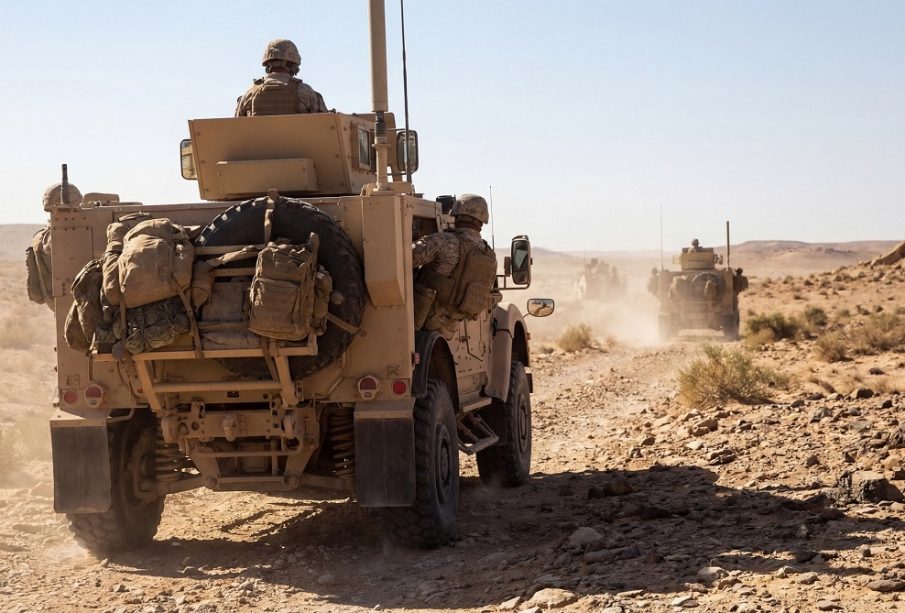
Desert operations bring different problems entirely. Sand acts like tiny knives, cutting into every surface it touches. Middle Eastern sand carries static electricity that zaps electronics without warning. Upon impact with jet exhaust, it turns to glass and is drawn into the engines. Afghanistan’s moon dust is stubbornly persistent. Materials must withstand harsh conditions and remain functional.
Beyond Traditional Metals
Steel worked fine when tanks rolled through France in 1944. Aluminum got the job done for Vietnam-era helicopters. But missiles fly at Mach 5 now. IEDs generate heat that turns regular armor into pudding. Radar systems pump out energy levels that cook standard components from the inside out. Modern composites changed everything. Mix carbon fibers with the right plastic to get panels stronger than steel and half the weight. Ceramic composites withstand high temperatures that melt aluminum. Some materials strengthen with heat, defying expectations.
The clever part? Stacking different materials like a sandwich. Armor may incorporate ceramic for projectile disruption, aramid fibers for capturing fragments, and polymer backing for shock absorption. A single layer cannot stop modern threats. Combined, they work miracles.
The Science of Survival
Testing military materials goes way beyond normal quality control. Labs recreate decades of wear in weeks. Machines fire millions of sand particles at sample panels. Temperature chambers swing from Arctic cold to furnace heat every few hours. Chemical baths simulate years of ocean exposure. If something’s going to break, better it happens in a lab than in combat.
Axiom Materials and other high-temperature composite materials suppliers for defense applications push boundaries even further, creating materials that maintain full strength above 1,000 degrees Fahrenheit. Missile nose cones need these properties. So do engine components that sit inches from combustion chambers. Armor panels protecting fuel tanks can’t soften when hit by incendiary rounds.
Computers now predict failure points before anyone builds prototypes. Software shows exactly where cracks will form, how impacts will spread, and which areas need reinforcement. Virtual testing finds issues that would otherwise take years to emerge. This accelerates development and dramatically cuts costs.
Looking Ahead
Tomorrow’s battlefields will demand even tougher materials. Hypersonic weapons generate plasma-level heat. Directed energy weapons focus incredible power on tiny spots. Electronic warfare creates electromagnetic fields that scramble unprotected systems. Research labs already work on answers. Materials that heal their own cracks. Coatings that adapt to threats automatically. Structures that harvest energy from vibrations to power sensors.
Conclusion
The substances protecting military personnel aren’t just materials anymore. They’re marvels of engineering, each one tested beyond breaking points most substances never approach. These materials are vital in extreme, deadly combat. Military superiority depends on molecules and chemical bonds as much as strategy and training.